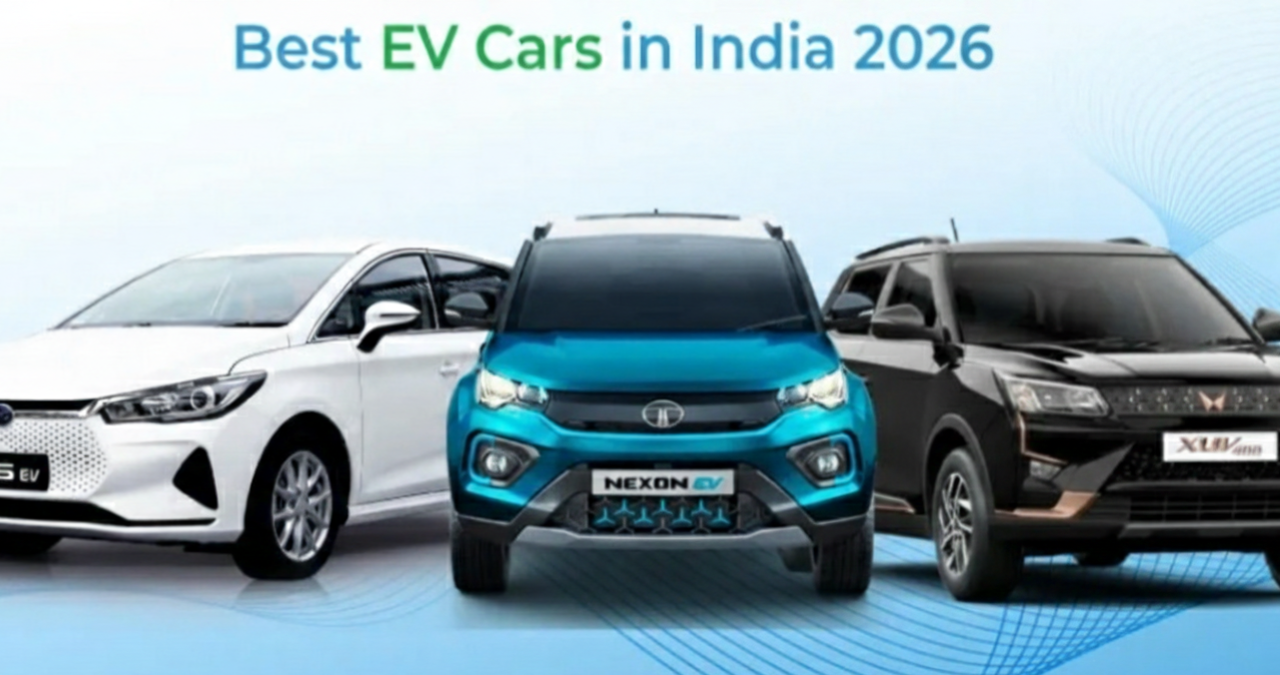

India’s electric vehicle (EV) market is accelerating rapidly in 2026, and SUVs are leading this transformation. Automakers are offering longer driving range, advanced features and competitive pricing to attract buyers shifting away from petrol and diesel cars. From premium long-range SUVs to compact city EVs, models like MG Windsor electric vehicle, Mahindra BE 6 and Tata Nexon electric vehicle are gaining strong attention, while urban-focused cars such as Tata Tiago electric vehicle and MG Comet electric vehicle continue to appeal to city commuters.
Long-Range Electric SUVs Taking the Lead
The MG Windsor EV is offered with two battery pack options — 38 kWh and 52.9 kWh. The smaller battery delivers up to 332 km range, while the larger pack claims about 449 km on a single charge. The SUV produces 134 hp power and 200 Nm torque, with prices starting around ₹14 lakh (ex-showroom).
Mahindra’s BE 6 targets performance-focused buyers. It comes with a 59 kWh battery producing 227 hp and 380 Nm torque, and claims a driving range of up to 557 km per charge. The starting price is approximately ₹19.65 lakh (ex-showroom), positioning it in the premium electric SUV segment.
Nexon EV Continues to Be a Strong All-Rounder
The Tata Nexon electric vehicle remains one of the most popular electric SUVs in India. It offers two battery packs — 30 kWh and 45 kWh — delivering ranges of about 275 km and 489 km respectively. The vehicle generates up to 142 hp power and 215 Nm torque, with a starting price of ₹12.49 lakh (ex-showroom). Its balance of range, pricing and practicality keeps it relevant among both new and experienced EV buyers.
Compact EVs Attracting Urban Users
Alongside SUVs, smaller electric cars are gaining popularity in cities. Models like Tata Tiago electric vehicle and MG Comet electric vehicle focus on affordability, easy parking and daily commuting needs. Their lower running cost and sufficient city range make them practical choices for first-time electric vehicle owners and short-distance users.
The growing variety of electric vehicles in India shows the market is moving beyond experimentation into mainstream adoption. Long-range SUVs are attracting highway users, while compact electric vehicle cater to city mobility. With improving charging infrastructure and rising fuel costs, electric vehicle are steadily becoming a practical and preferred option for Indian car buyers.
Also Read: Bike Mileage Tips: Improve Fuel Efficiency & Save Petrol Easily