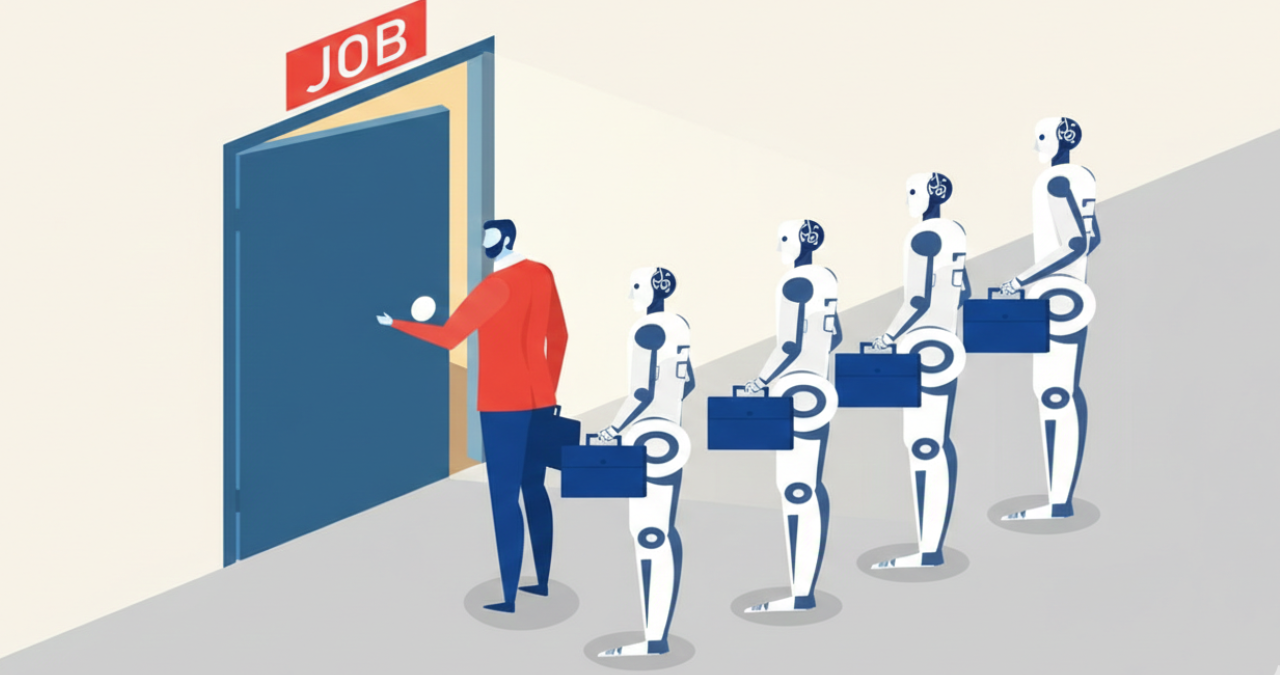

AI Job Impact: Debate around workplace automation has intensified after entrepreneur and former U.S. presidential candidate Andrew Yang warned that millions of jobs could disappear within the next 12 to 18 months. His statement reflects growing global concern about how rapidly intelligent software tools are transforming professional work across industries.
AI Job Impact: Why Experts Believe Jobs Could Change Rapidly
Andrew Yang explained that modern AI systems can already complete complex tasks such as coding, website design and documentation within minutes. According to him, a project that normally required a team of designers and developers was finished instantly using automated tools. This demonstrates how productivity gains can reduce demand for repetitive office work.Studies estimate that 20–50% of the 70 million white-collar workers in the United States could face role changes or job loss in the coming years.
Roles involving data processing, customer support, routine writing and administrative analysis are considered most vulnerable because they rely on predictable digital tasks.However, economists clarify that technology historically replaces some work while creating new categories of employment. Instead of full unemployment, the larger shift may be toward reskilling and hybrid job roles combining human judgment with automation assistance.
What Workers and Companies Should Do Next
Businesses are increasingly integrating automation into daily operations to cut costs and improve speed. This trend may push organizations to prioritize employees who can manage systems, interpret outputs and handle creative decision-making rather than routine execution.Career advisors suggest workers focus on skills that machines struggle with — critical thinking, communication, leadership and domain expertise.
Continuous learning and adapting to new tools can reduce job risk significantly. Governments and educational institutions are also being encouraged to redesign training programs for future workforce needs.The discussion highlights a broader economic transition rather than a single-sector disruption. While certain positions may shrink, new opportunities in supervision, maintenance and innovation are likely to grow. The coming years will depend largely on how quickly individuals and institutions adapt to technological change.
Also Read: AI Buzzwords Explained: LLMs, Generative AI and Guardrails Made Simple