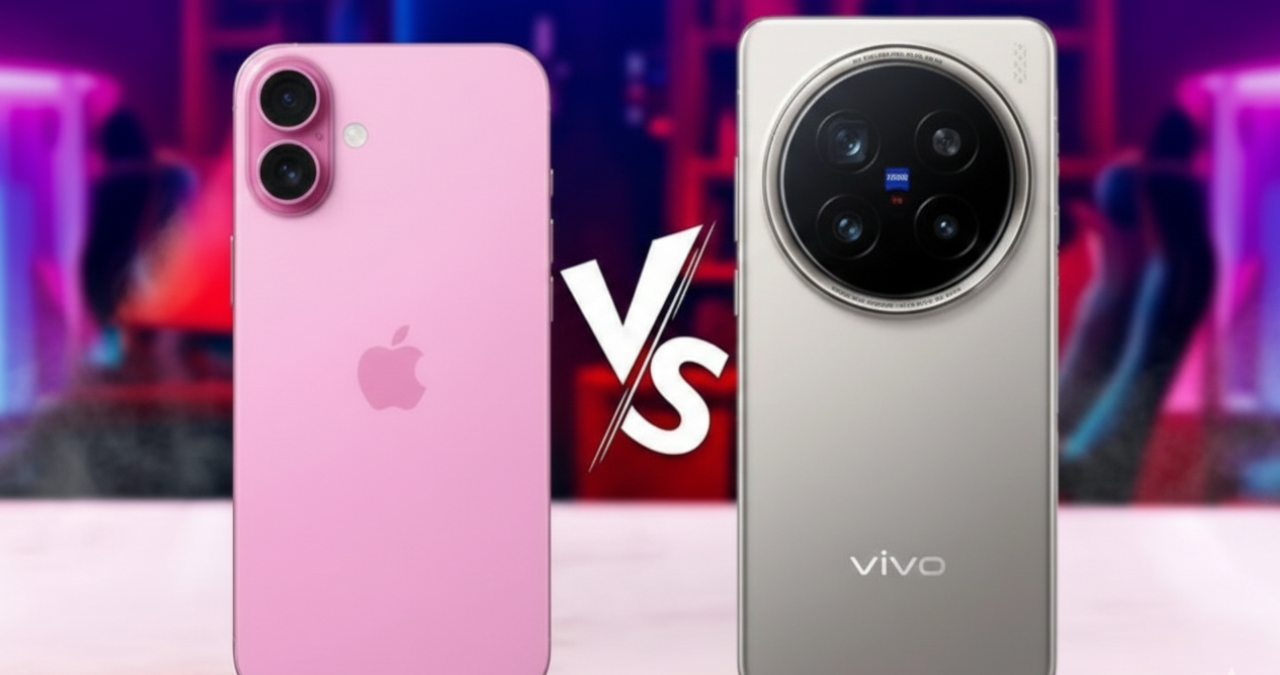

India’s smartphone industry remained nearly flat last year but showed strong shifts in user preference. According to the latest IDC Worldwide Quarterly Mobile Tracker, total shipments touched about 152 million units with only 0.5% annual growth. The mass market is driven by affordability, while the premium category continues expanding faster than the overall market.
Vivo & Apple: Volume Leader and Budget Market Growth
The report shows Vivo retained the number-one position in overall shipments with around 19.3% market share. Samsung followed at 14.1% and Oppo at 13.3%, while Realme secured fourth place after a decline in some competing brands. Analysts say the growth pattern reflects India’s price-sensitive consumers who prioritize value-for-money devices in entry-level and mid-range segments.
Shipments slowed early in the year but picked up in the second and third quarters. However, the fourth quarter saw a 5% decline to roughly 34 million units due to post-festival inventory correction and weaker demand. The sub-$100 category grew 18% year-on-year, indicating first-time buyers and rural adoption remain strong growth drivers.
Motorola recorded the fastest expansion in the entry-level segment, while several brands gained share from declining shipments of older competitors. Industry experts say expanding 4G coverage and affordable data plans continue to influence purchasing decisions. Even with slower growth, India remains one of the most competitive smartphone markets globally.
Premium Segment Expansion and Consumer Shift
While budget phones dominate unit sales, the premium category tells a different story. Apple recorded strong growth with shipments rising around 16% year-on-year to about 14 million units, making India its fourth-largest global market. The brand holds nearly 29% value share, showing higher revenue despite lower volume ranking.
Demand for flagship devices increased due to financing options, trade-in programs and longer software support cycles. The popularity of recent flagship models also contributed significantly to the company’s growth in urban regions. Analysts note that aspirational buying patterns are expanding beyond metros into tier-2 cities.
This contrast highlights a dual-speed market: affordability drives volume while brand perception drives revenue. The overall trend suggests India is gradually shifting from replacement-driven purchases to experience-driven upgrades. Over time, improved income levels and digital services may push more users toward premium devices.
Also Read: Motorola Moto G67 Power Specs and Features: Big Display, Tough Build, and Gorilla Glass