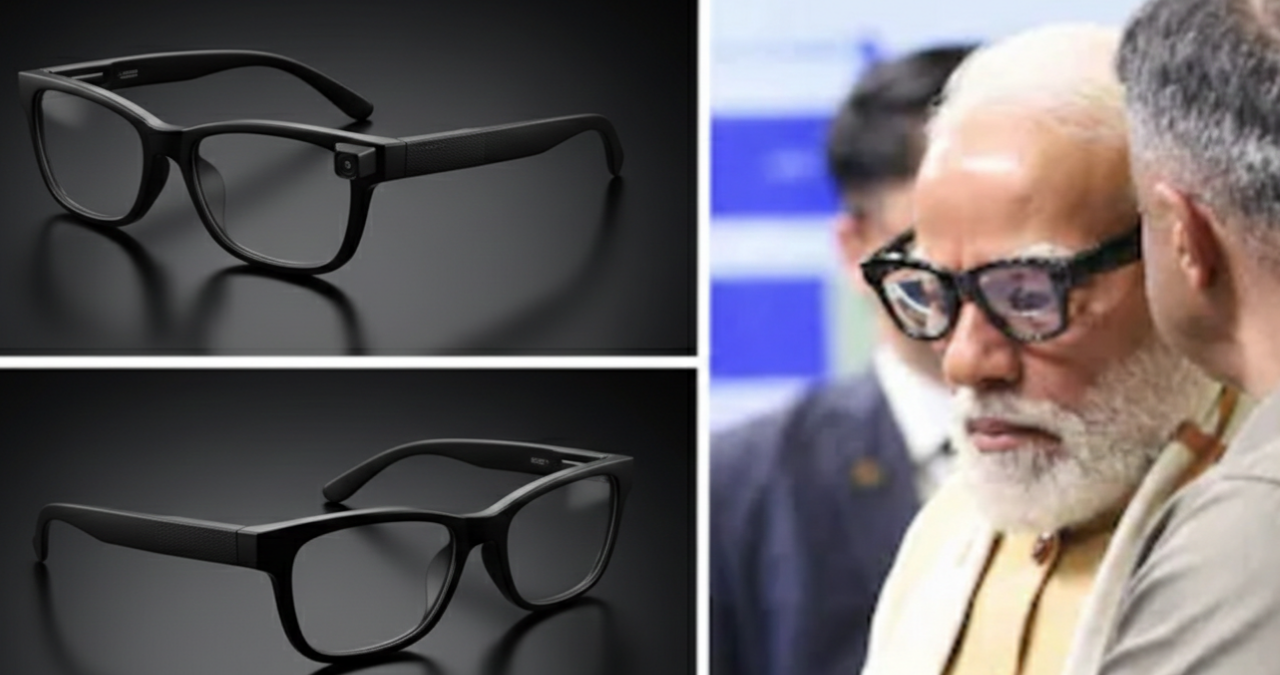

Sarvam Kaze: India’s deep-tech ecosystem has taken a notable step into wearable hardware. Startup Sarvam unveiled its first smart eyewear Kaze at the India AI Impact Summit and confirmed a May 2026 launch. The device is designed and developed in India and aims to bring computing beyond smartphone screens into everyday human interaction.
What Makes Sarvam Kaze Different From Existing Smart Eyewear
Sarvam Kaze says the glasses run on its in-house language and vision models and are built around the idea of ambient computing — technology that assists without forcing users to constantly look at a display. The company’s vision is to move digital interaction into real-world context through voice assistance, contextual notifications and real-time translation.
The CEO, Pratyush Kumar, shared a teaser video showing a lightweight frame and embedded camera module. According to him, the product was also demonstrated to Prime Minister Narendra Modi during an early preview. The design appears similar to popular wearable eyewear form factors already seen globally, but Sarvam claims its software layer is optimized for Indian languages and local usage patterns.
Unlike smartphones, the device focuses on hands-free interaction. Users can ask questions, capture moments, get navigation guidance and receive contextual prompts. Features expected at launch include voice assistant integration, live translation, smart camera recognition and notification alerts. Industry observers say such wearable computing devices could reduce screen time while keeping users digitally connected.
Can an Indian Startup Challenge Global Tech Players?
The smart glasses market is expanding rapidly worldwide. Companies are experimenting with camera-based assistants and augmented experiences as the next computing platform after smartphones. A well-known global social media company sold millions of connected eyewear units in 2025, showing growing consumer interest. Reports also suggest other major hardware brands are preparing similar launches.
In this context, Sarvam Glass marks an early attempt to build consumer AI hardware from India rather than only software services. Analysts believe local language understanding could be a major advantage in markets where multilingual communication is essential. If pricing remains competitive, the device could appeal to students, creators, and professionals who need quick information access without using phones.
Experts say the long-term success of such devices depends on battery efficiency, privacy protection and ecosystem apps. Adoption will also rely on practical use cases like navigation, learning support and productivity tools. The entry of an indigenous player signals that India’s technology sector is moving from being only an app economy to becoming a hardware innovation hub as well.
Also Read: AI Buzzwords Explained: LLMs, Generative AI and Guardrails Made Simple